 / Ons tijdschrift / Spaghetti: verus protagonisti cuscinæ Italicæ.
/ Ons tijdschrift / Spaghetti: verus protagonisti cuscinæ Italicæ.
/ Ons tijdschrift / Spaghetti: verus protagonisti cuscinæ Italicæ.
Spaghetti: on the synonym of happiness at the table. The pasta par excellence, the emblem of Italy in the kitchen. When we talk about spaghetti, it immediately brings a smile; it is a synonym of family and home. The spaghetti are made from semolina of durum wheat and water; in their classic long, thin, round section shape, they are unmistakable even when often compared to vermicelli, extruded with a larger diameter.
Spaghetti historia: the first written reference to dried pasta in Italy, as well as the existence of such industry, can be found in the description handed down by Idrisi at the time of Ruggero II, dating back to the 12th century.
In Ruggero's book published in 1154, Idrisi describes Trabia, a town near Palermo, where pasta in the shape of slightly rounded threads was produced. In the Roman era, production evolved, first taking the name of vermicelli and then spaghetti. At that time, the pasta was known by the more generic name of Itrya, which meant "filamentous and rounded mass". The Itrya was the object of a flourishing trade throughout the Mediterranean area.
At the beginning of the 19th century, in Naples, the mechanization of the production process began, giving rise to an empire that needs no further introductions: spaghetti are loved in Italy and all over the world, synonymous with simplicity and versatility of preparation.
Who invented spaghetti is a question that cannot be answered with a precise answer. Interpretations of historical sources vary, and probably the most widespread is the one about the simple use of wheat as a natural resource known for about 10,000 years.
From the wheat, flour was obtained, which was kneaded with water; it was then cooked on the stone or in boiling water to obtain the dish known to all. As some historians assert, it would not be correct to trace the introduction of spaghetti back to 1295, following Marco Polo's journey from China. This is because Italy was already using it. For sure, Chinese spaghetti were soy-based, as wheat was not known there, while in Italy, the people always fed themselves with wheat.
In fact, there is a text from the 12th century, prior to Marco Polo's venture, that mentions a dish of vermicelli as wheat pasta in the form of thin threads, produced near Palermo, probably of Arab origin. It can be stated that Chinese and Italian spaghetti are independent, while our wheat spaghetti might be of Arab invention. The fact remains that they rapidly spread throughout Italy, with the success known to all.
Spaghetto, the golden thread to which one of the most pleasant sensations is tied: the tender and balanced taste of nature, with the wisdom of Italian cuisine.
“You deprive me of the joy of the spaghetto,”, said rag. Ugo Fantozzi in the film Fantozzi – The Return. The spaghetto has been the subject of literary quotes, starring on tables even in films and theater.
There is extensive documentation illustrating the spaghetto in cinema, starting from Totò in the film “Miseria e nobiltà”, where spaghetti end up in the pockets of the protagonist driven by hunger. Alberto Sordi also pays tribute to the spaghetto in “An American in Rome”, in a scene where he finds himself in front of a sumptuous plate of well-seasoned spaghetti.
And then Spaghetti & Mandolino: we couldn't help but include a quote to ourselves: simple, traditional, perhaps even popular but certainly reliable and helpful for all people (in the kitchen). Our motto also comes from there, from the use of the term spaghetti to tell that Italy is also this, especially abroad.
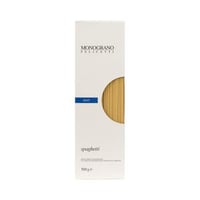
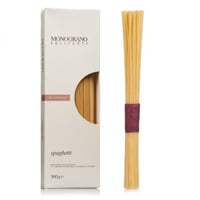
For a good spaghettata, quality spaghetti are needed! We present some top products, undisputed icons of Italian cuisine, such as the spaghetti di semola di grano duro di Gragnano of extra quality. Mulino di Gragnano offers the classic version of durum wheat semolina, in long and thin strips, with a characteristic round section. Made with the best Apulian wheat, the bronze drawing ensures the porosity of the spaghetti, enhancing the flavor of the dish. The drying is slow and at low temperature, to preserve the characteristics of the wheat and the cooking hold. It doesn’t take much to enhance its flavor: simple sauces like tomato and basil, the classic garlic, oil, and chili, or the traditional carbonara.
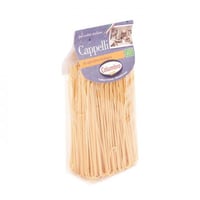
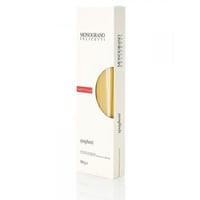
The spaghetti Felicetti monograno Senatore Cappelli are produced from a careful selection of organic raw materials, a combination of Trentino and Apulian lands. The wheat from Matera is one of the best overall from a nutritional point of view, as it is rich in highly digestible proteins. You don’t need large condiments to enrich the dish: the simplicity of a tomato and basil sauce will enhance the natural and simple taste of the best wheat in Italy.
The Felicetti pasta factory also offers the spaghetti di grano duro integrale biologico, with all the benefits of wholemeal pasta, to create first courses rich in flavor and health. The taste? Unforgettable, round and natural.
For a good plate of spaghetti, you don’t need much: Italian cuisine is rich in ideas linked to tradition. An example for all: spaghetti alla carbonara. How to make it the right way? Here’s the recipe! Gather the ingredients: 320 grams of spaghetti, 150 grams of guanciale, 6 egg yolks of medium eggs, 50 grams of pecorino romano, salt and pepper to taste. Bring a pot of salted water to a boil to cook the pasta. Meanwhile, remove the rind from the guanciale and cut it into strips approximately 1 cm thick. Place the pieces in a pan and fry for about 15 minutes over medium heat.
Pour the yolks into a bowl and add most of the pecorino. Season with pepper and mix everything with a hand whisk. To dilute, add a tablespoon of pasta cooking water. Mix, blending everything well.
Drain the pasta al dente in the pan with the guanciale and sauté it briefly to flavor it. Remove from heat and add the egg and pecorino mixture to the pan. Mix well to combine. If necessary, add a little pasta cooking water to promote creaminess. Serve the spaghetti immediately, sprinkling a bit of the pecorino set aside on each plate and a sprinkle of ground pepper.
Let’s also savor another dish from tradition: spaghetti with clams. To prepare them you will need 320 grams of spaghetti, 1 kg of clams, a clove of garlic, parsley, oil, pepper, and salt. The first thing to do is to take care of the cleaning of the clams. Make sure there are no broken shells and knock them on a cutting board to remove the sand. Place them in a colander and rinse well. Place them in a bowl and add coarse salt. Let them soak for a couple of hours. This operation will promote the spurting of any residual sand.
Heat oil in a pan, add the garlic, and after rinsing and draining the clams, add them to the pan. Cover with a lid and cook for a few minutes. When the clams are all open, the cooking will be complete. Cook the spaghetti and drain them halfway through cooking. Add them to the pan with the sauce with a bit of boiling water and finish cooking. Add the chopped parsley and serve immediately.
The most well-known recipes are those of traditional flavors, typically with tomato sauce, or in white with grated cheese. Basil is one of the main elements for spaghetti with sauce, as it gives the dish an intoxicating and inviting aroma.
Spaghetti: they are the protagonists of Italian cuisine, to be exalted as tradition wants.
 S&M
S&M
We raden u aan veel plezier te hebben



✔ U hebt het product aan uw winkelwagentje toegevoegd!