 / Our magazine / Tuna, anchovies, or stockfish? Three flavors to define character.
/ Our magazine / Tuna, anchovies, or stockfish? Three flavors to define character.
/ Our magazine / Tuna, anchovies, or stockfish? Three flavors to define character.
There are ingredients that fill a dish. And then there are others that give it identity. Tuna, anchovies, and stockfish belong to this second category. They are not just there to "add flavor": they change the rhythm of the recipe, the depth of taste, the way the sea enters your kitchen.
These ingredients have one thing in common: they are products of preservation. They come from an Italy that had to learn to bring fish far from the coasts, to make it last, to transform it into a gastronomic heritage and end up telling three completely different worlds.
The tuna seeks balance and roundness. The anchovy thrives on intensity and precision. The stockfish, on the other hand, is matter, patience, slow transformation. Three opposing characters. Three completely different ways of building a dish. And the first mistake to avoid is treating them as interchangeable ingredients.
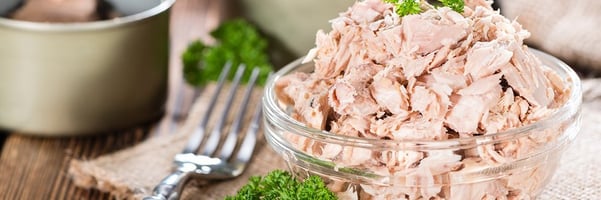
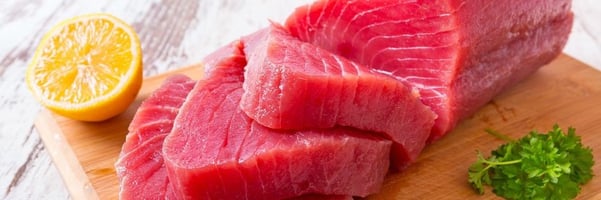
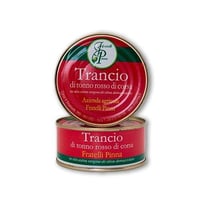
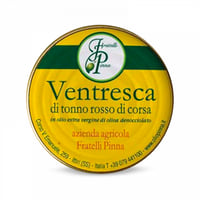
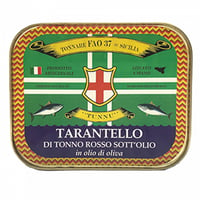
Tuna is probably the most reassuring ingredient of the three. Soft, full, immediate. In Italy, it has made its way into everything: cold pasta, salads, quick sauces, appetizers, sandwiches, preserves. But this familiarity often works against it.
Because good tuna is not neutral. It has structure, natural salinity, and an elegant fatty component that can become extraordinary or heavy, depending on how it is treated.
Italian tradition teaches one very clear thing: tuna loves simplicity. Fresh tomatoes, capers, olives, sweet onion, basil, lemon. Ingredients that accompany without overshadowing.
One of the great contemporary mistakes is adding too much. Mayonnaise, aggressive sauces, invasive cheeses, excessive spices: all of this cancels the character of the tuna and turns the dish into something indistinct.
The tomato must also be handled with care. If it's too acidic or too abundant, it dominates. Tuna wants sweet, ripe tomatoes, perhaps just sautéed, not heavy, long sauces.
Pasta with tuna, when done well, is an exercise in balance. A good short pasta, extra virgin olive oil, quality tuna, little tomato, and perhaps a fresh herb. That's it. The rest risks being noise.
Pay attention to cooking as well. Tuna in oil, already cooked, should not be stressed too much over the fire. It should be added almost at the end, allowing it to maintain softness and identity. When it is "overcooked," it loses elegance and becomes dry.
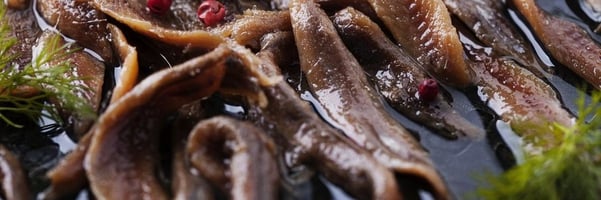
The anchovy is the opposite of the tuna. It does not seek visual prominence. It works quietly. But it takes very little to completely change a dish.
Italian cuisine has used it for centuries as a flavor accelerator. Not only in fish dishes: also in vegetables, sauces, meats, and dressings. Because the anchovy does not just bring saltiness. It brings depth.
Pasta with oil, anchovies, and toasted breadcrumbs can have more character than much more elaborate recipes. The secret lies in the ability of the anchovy to dissolve, meld, and seemingly disappear while still leaving a persistent and precise taste.
The most common mistake is using too much. The anchovy should not salt the dish: it should support it. When it becomes dominant, everything flattens out on saltiness.
Another frequent mistake: pairing it with too aggressive ingredients. The anchovy loves intelligent contrasts, not battles of intensity. It works magnificently with cauliflower, friarielli, puntarelle, butter, citrus fruits, toasted bread, and wild fennel. Not with heavy sauces or invasive spices.
Temperature matters a lot. Anchovies in oil or salt must melt gently in warm oil, never fry violently. If they burn, they become bitter and completely lose elegance.
And then there is the issue of quality. A good anchovy has a balance between salt, sea, and maturation. Industrial ones that are too aggressive often destroy the dish instead of building it.
In Italian tradition, the anchovy represents pure culinary intelligence: a small ingredient capable of giving soul even to the humblest recipes.
The stockfish is another world altogether. Here there is no immediacy. There is slow transformation.
Fish dried in the northern European wind, it entered Italian kitchens through ancient trade and became a protagonist especially in northern Italy and in the southern Tyrrhenian regions. Veneto, Liguria, Campania, Calabria: each territory has reinterpreted it, creating completely different identities.
Stockfish cannot be improvised. It requires time even before cooking: long soaking, attention, delicacy. And this is precisely what makes it fascinating. It does not allow shortcuts.
It has a meaty, fibrous, deep consistency. And precisely for this reason, the seasonings must accompany it without suffocating it.
One of the major mistakes is to overload it with too much tomato or spices. Stockfish loves clean but measured flavors: olives, capers, potatoes, onion, parsley, milk in northern versions, light tomato in southern ones.
Let’s think of the Venetian baccalà: very few ingredients, but worked with technique and patience. Or the Neapolitan stockfish stew, where the sauce accompanies without turning the fish into a simple "container".
Here too, consistency matters a lot. Stockfish must remain recognizable. If it completely falls apart or is covered with excessive creams, it loses its character.
Traditional Italian cuisine treats it almost like a noble meat: respect, slow cooking, balance.
Tuna, anchovies, and stockfish tell three opposing ways of using the sea.
Tuna seeks softness and Mediterranean immediacy. The anchovy works in the shadows building depth. The stockfish brings with it the value of slowness and transformation.
And all three teach an important lesson: flavor does not come from accumulation. It comes from precision.
Great Italian cuisine has never needed to exaggerate. It has always preferred to subtract rather than add, to leave space for ingredients instead of covering them.
Because character, at the table, does not come from who shouts the loudest. It comes from who manages to leave a mark even with little.
 S&M
S&M




We recommend that you enjoy



✔ You have added the product to your cart!