 / Our magazine / 5 pasta shapes for baked pasta dishes.
/ Our magazine / 5 pasta shapes for baked pasta dishes.
/ Our magazine / 5 pasta shapes for baked pasta dishes.
Baked pasta is a serious business. It is not simply "pasta with sauce and gratin". It is one of the great rituals of Italian cuisine: noisy Sundays, spoons sinking into the golden crust, the aroma of béchamel, tomatoes, and cheese invading the house since morning.
Yet, precisely because it seems like a generous and permissive recipe, it is often treated with little attention. It is thought that it is enough to use any pasta, overload it with sauce, and pop everything in the oven. In reality, the choice of shape completely changes the final result. Because in baked pasta, the hold, the ability to catch the sauce, resistance to double cooking, and harmony between crust and internal softness count.
Not all pastas survive well in the oven. Some crumble, others dry out too much, while others become indistinct masses. The right shapes, on the other hand, can transform each spoonful into a perfect balance of structure, creaminess, and flavor.
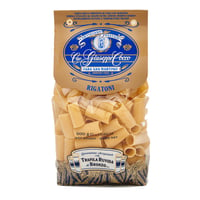
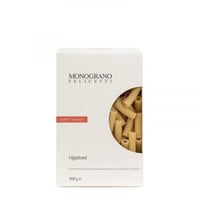
If there is a shape born for the oven, it is the rigatone. Large, full-bodied, hollow, rough: everything about its shape seems designed to hold sauce.
Rigatoni work wonderfully with important ragù, béchamel, mozzarella, and aged cheeses. The ridges hold the sauce on the outside while the inner hole collects cream, sauce, and small pieces of meat. Every bite becomes complete. They also have an extraordinary ability to withstand prolonged cooking without losing identity. And this is crucial: good baked pasta should not become compact like a single block. The pasta should still be recognizable.
They are perfect in classic preparations from Southern Italy, especially with slow-cooked ragù, meatballs, smoked provola, and hard-boiled eggs. But they work just as well in lighter versions with grilled vegetables and delicate béchamel.
The most common mistake? Cooking them too much before baking. Rigatoni should be very al dente when placed in the dish, as they will continue to cook, absorbing moisture and flavor.
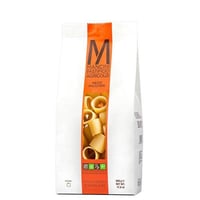
Mezze maniche are often underestimated, but in baked pasta, they have a rare quality: they distribute the sauce extremely evenly.
More compact than rigatoni and less visually invasive, they allow for greater harmony between pasta, sauce, and cheese. They are ideal when one wants an elegant baked pasta, less rustic and more refined.
They work wonderfully with mushrooms, sausage, radicchio, cheese cream, or white ragù. Their medium size allows for a very balanced texture: no overly large bites, no excessive accumulations of sauce.
Mezze maniche are also excellent in vegetarian versions. Pumpkin, taleggio, kale, or eggplant find in this shape a perfect structure.
Moreover, they have a great ability to maintain a crusty surface without drying out inside. And in baked pasta, the crust counts a lot: it must be golden, not dry.
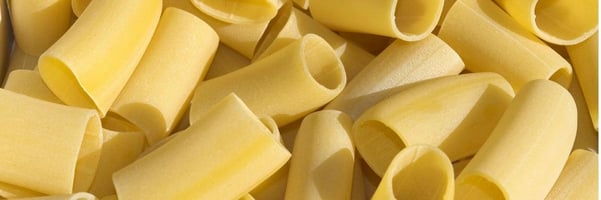
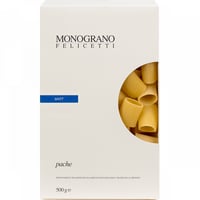
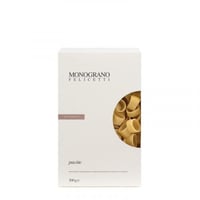
Paccheri are the shape of generosity. Large, scenic, almost exaggerated. And for this reason, in baked pasta, they can become extraordinary.
But be careful: paccheri require technique. They cannot be treated like any other pasta. They need important and well-balanced sauces.
They are perfect when stuffed. Ricotta and spinach, Neapolitan ragù, eggplant and provola, fish cream, light béchamel, and parmesan. Their width allows for the construction of a true architecture of flavors.
Baked pasta with paccheri becomes almost a festive family dish. Every piece has identity, every forkful is different.
They also work wonderfully with simple tomato and well-dried mozzarella, as the shape itself creates richness without needing to overload the dish.
The most frequent mistake is using too thin sauces. Paccheri want rich sauces that can stay inside the pasta without spilling out.
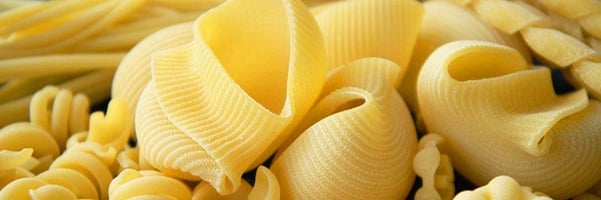
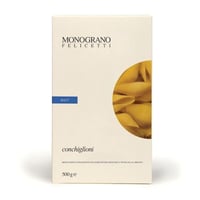
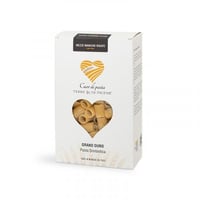
Conchiglioni are made to hold. And in baked pasta, this characteristic becomes valuable.
Their shape naturally collects fillings, creams, béchamel, vegetables, and cheeses. They are the ideal shape for those who enjoy softer and creamier preparations.
Fresh ricotta, spinach, light tomato, and parmesan perhaps represent the most classic combination. But they work wonderfully with fish, zucchini, mushrooms, or eggplant cream.
The great strength of conchiglioni is the difference in texture they can create: lightly gratinated surface, soft and creamy inside.
They are also one of the few shapes that allow for very neat and beautiful portions to serve. Each conchiglione remains recognizable, elegant, almost individual.
Here, the quality of the béchamel is decisive. It must be light, fluid, never sticky. A béchamel that is too heavy completely destroys the delicate balance of the shape.
Ziti spezzati tell one of the most authentic souls of Italian baked pasta. Neapolitan tradition, family lunches, slow-cooked ragù, oven on for hours.
Unlike other shapes, ziti create a more compact and enveloping baked pasta. They do not seek elegant precision: they seek abundance, depth, comfort.
They work magnificently with important ragù, fiordilatte, meatballs, cured meats, and pecorino. The smooth surface allows the sauce to envelop the pasta evenly, creating that typical creamy and layered consistency.
Ziti spezzati also have an important advantage: they distribute perfectly in the dish, creating a continuous balance between the surface crust and the softer inner part.
They are the ideal shape for large tables, where the baked pasta arrives in the center and immediately becomes conviviality.
Baked pasta must never be heavy just for the sake of being so. It must be rich, yes, but balanced. Every element must have a function: the pasta must support the sauce, the cheese must bind without covering, the oven must create a crust without drying out.
And above all, one must remember one fundamental thing: baked pasta continues to live even after it has come out of the oven. It should be left to rest for a few minutes. That’s when it compacts, finds balance, and becomes truly good.
Because great Italian cuisine often starts like this: from apparently simple dishes that, when made well, can transform everyday ingredients into memories.
 S&M
S&M


We recommend that you enjoy




✔ You have added the product to your cart!