 / Our magazine / Balsamic Vinegar of Modena PGI: types, production areas, differences with DOP, and how to choose.
/ Our magazine / Balsamic Vinegar of Modena PGI: types, production areas, differences with DOP, and how to choose.
/ Our magazine / Balsamic Vinegar of Modena PGI: types, production areas, differences with DOP, and how to choose.
The Balsamic Vinegar of Modena IGP is one of the symbols of Italian gastronomy worldwide, a condiment capable of expressing history, territory, and craftsmanship. Since 2009, it has enjoyed the European IGP certification (Protected Geographical Indication), which safeguards its quality and connection to the areas of origin.
However, it is often confused with the Traditional Balsamic Vinegar DOP: knowing the differences is essential for making informed purchases.
According to the regulations, Balsamic Vinegar of Modena IGP is categorized into three types based on aging time:
Normal – minimum of 60 days aging in wooden barrels. Smoother and with a lively acidity, ideal for daily cooking use.
Aged – minimum of 3 years of maturation. Denser, aromatic, and complex, perfect for raw dressings on salads, meats, and cheeses.
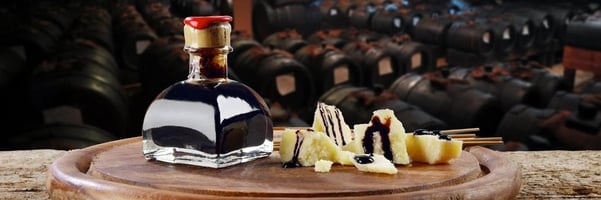
Reserve – minimum of 5 years of aging. Rich and velvety, suitable for prestigious pairings such as aged Parmigiano Reggiano, desserts, or fresh fruits.
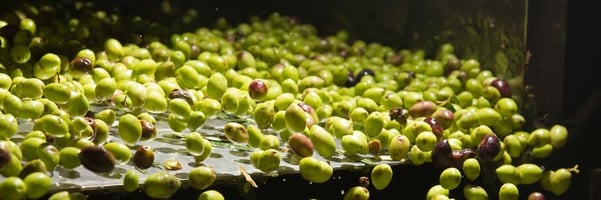
The regulations establish that Balsamic Vinegar of Modena IGP can only be produced in Emilia Romagna only in the provinces of Modena and Reggio Emilia, using cooked must from typical grape varieties such as Lambrusco, Trebbiano, Sangiovese, Albana, Ancellotta, Fortana, and Montuni.
In the 1980s, Balsamic Vinegar of Modena was a product known mostly in Italy and in some niches abroad. Today it is a global success: the Consortium estimates over 100 million liters produced each year, with exports representing more than 90% of production, and a constant growth both in value and volume, thanks to the enhancement of the IGP brand.
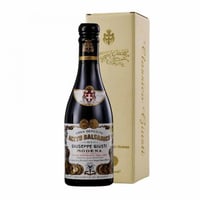
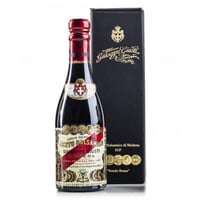
In addition to the official categories, many producers adopt seals or medals (gold, platinum, silver, bronze) to visually communicate to the consumer the density, aromatic complexity, and recommended use. These are not official designations of the regulations, but internal scales that help choose the right bottle for every occasion.
Raw materials
IGP: a mixture of cooked must and wine vinegar, with the possibility of adding part of aged balsamic vinegar.
DOP: only cooked must from grapes originating from the provinces of Modena or Reggio Emilia, without the addition of wine vinegar.
Production method
IGP: aging in wooden barrels for at least 60 days (3 years for “Aged”, 5 for “Reserve”).
DOP: minimum aging of 12 years (25 years for “Extra Old”), with annual transfers in batches of barrels made from different woods.
Production volume
IGP: production of over 100 million liters annually, primarily intended for export.
DOP: production limited to a few tens of thousands of liters, resulting from a slow and artisanal process.
Price and positioning
IGP: more accessible, suitable for both daily and gourmet use.
DOP: luxury product, with high prices due to the long maturation and limited yield.
Seals and awards
IGP: no official color coding, but gold/silver/platinum seals are often used by producers.
DOP: official recognitions (e.g., gold, silver seals, and lobster in the case of the Traditional from Reggio Emilia).
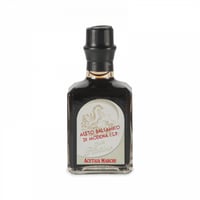
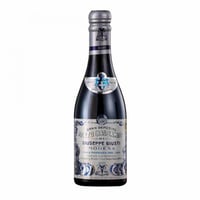
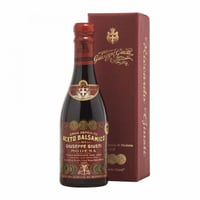
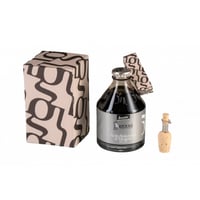
From our selection on Spaghetti & Mandolino, we recommend three excellences:
Acetaia Giusti – Historic Modenese house, famous for the “Medals” that indicate increasing aging and density.
Acetaia Vetus – Balanced and aromatic recipes, ideal for creative pairings.
Acetaia Guerzoni – Leader in organic and Demeter, with balsamics of authentic character.
Shavings of Parmigiano Reggiano with drops of Reserve.
Prosciutto Crudo and figs with Aged balsamic vinegar.
Grilled vegetables seasoned with a quick reduction of Normal balsamic.
Desserts such as strawberries or cream ice cream with Reserve or Gold seal.
Traditional Balsamic Vinegar of Modena: history and characteristics – Differences between IGP and DOP, production processes, and tasting secrets.
Emilian food excellence: balsamic vinegar, cotechino, zampone, Lambrusco Grasparossa – A journey through Modena and Reggio specialties.
Pasta sauces: condiments and recipes – Ideas for using balsamic vinegar and other condiments in cooking.
 S&M
S&M

We recommend that you enjoy




✔ You have added the product to your cart!