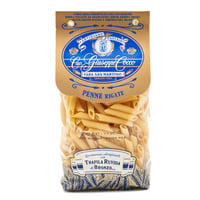
 / Our magazine / Smooth penne vs ridged penne: who will win?
/ Our magazine / Smooth penne vs ridged penne: who will win?
/ Our magazine / Smooth penne vs ridged penne: who will win?
There is a question that still manages to divide families, friends, and summer tables in Italy: is it better to have smooth penne or ridged penne? A discussion that seems lighthearted, but in reality, tells us a lot about our way of experiencing cooking. Because behind that seemingly simple surface lies a world made of technique, tradition, balance, and gastronomic culture.
Today, ridged penne seem to dominate uncontested. They are everywhere. Durable, practical, reassuring. Smooth penne, on the other hand, are often looked at with suspicion, like an elegant but outdated old relative. Yet the truth is that there is no absolute better format. There is the right format for the right sauce.
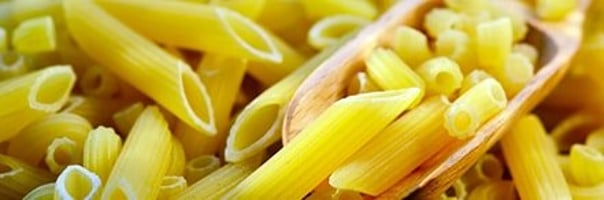
Smooth penne originate from a time when the quality of pasta was the real protagonist. Important hard grains, slow drying, bronze extrusion: the surface of the pasta was naturally porous and capable of binding to the sauce without the need for deep grooves. The ridges came later, mainly to help smoother and more compact industrial productions hold the sauce better.
But reducing everything to "it holds the sauce better" is a mistake. Because the relationship between pasta and sauce is much more refined than that.
Smooth penne, for example, have an extraordinary elegance with creamy and well-emulsified sauces. Think of a slowly reduced tomato sauce with extra virgin olive oil and basil: the smooth surface allows the sauce to envelop the pasta evenly, without excessive accumulations. Or a classic vodka pasta, creamy but not heavy, where the sauce needs to flow and not "get stuck." Even butter and Parmigiano Reggiano work magnificently on smooth penne because the sauce creates a thin and continuous film that accompanies every bite.
Smooth penne shine with delicate fish sauces as well. A sauce with shrimp, lemon zest, and a little fresh tomato risks getting lost in the deep ridges. The smooth surface, on the other hand, allows the softness of the sauce to shine and enhances the sweetness of the fish. The same goes for light zucchini creams, pepper soups, or light fondues of fresh cheeses.
Then there is another great ally of smooth penne: good oil. When the sauce is built more on emulsification than on quantity, smooth penne become refined. Think of quickly sautéed cherry tomatoes, torn basil leaves, and a great extra virgin olive oil: here elegance is required, not aggressiveness.
Ridged penne, on the other hand, were born for more structured sauces. The grooves pick up pieces, hold fibers, and capture textures. That's why they work wonderfully with classic ragù, where meat and sauce need to adhere to the pasta decisively. A smooth penna with a very rustic ragù risks leaving some of the sauce at the bottom of the plate. The ridged penne welcome it and distribute it better.
Also, hearty vegetable sauces find a perfect home in the ridges. Diced eggplants, sautéed zucchini, sautéed mushrooms, artichokes, crumbled sausage: all ingredients that need a surface capable of "holding them." Ridged penne are also excellent with rustic pesto, especially when it contains coarsely chopped nuts or important aged cheeses.
And then there are baked preparations. Here ridged penne almost always win. Baked pasta, timbales, recipes with béchamel or mozzarella: the grooves help the sauce stay compact during cooking and make each bite richer and more uniform.
Interesting is also the relationship with spiciness. A very intense arrabbiata sauce often finds in ridged penne a greater capacity for distribution. The chili, garlic, and concentrated tomato enter the grooves and make the flavor more persistent.
But be careful: one must not think of smooth penne as a fragile or inferior format. They are simply more demanding. They require a high-quality pasta and a well-executed emulsification. If the chef does a poor job, the smooth penne expose it immediately. Ridged penne, on the other hand, are more forgiving. And that is also why they have become so popular in modern kitchens.
The difference is even felt in the chewing. Smooth penne have a more uniform, elegant, continuous bite. Ridged penne increase friction, amplify the presence of the sauce, and make the bite more "material." Two completely different experiences.
There is also the topic of cold pasta. Here, ridged penne often have a practical advantage: they hold cold dressings, light creams, diced vegetables, tuna, and cheeses better. But a high-quality smooth penna, dressed with fresh and non-intrusive ingredients, can become surprisingly refined even at room temperature.
In the end, the real question is not which format will win. The correct question is: what do we want to tell with that dish?
Ridged penne speak a generous, rustic, immediate language. Smooth penne tell of precision, balance, and essentiality. One conquers right away, the other slowly. One emphasizes texture, the other fluidity.
And perhaps the secret of Italian cooking lies precisely here: not to choose once and for all, but to understand each time which shape can give the most to a particular flavor. Because in Italy, pasta is never just pasta. It is a way of thinking about taste. Visit Spaghetti e Mandolino
 S&M
S&M


We recommend that you enjoy




✔ You have added the product to your cart!