 / Our magazine / Salad you find, vinegar you choose.
/ Our magazine / Salad you find, vinegar you choose.
/ Our magazine / Salad you find, vinegar you choose.
The salad is probably the most underrated dish in Italian cuisine. Too often it is considered a simple side, something to quickly dress with Evo oil, salt, and a drizzle of vinegar. Yet, just changing one ingredient - the vinegar - can completely transform the result.
Vinegar is not only used to add acidity. It helps to build balance. It can enhance the sweetness of a vegetable, lighten a cheese, elevate a fish, or give character to a simple seasonal salad. Each vinegar tells a different story, and just like with wine, each type finds its ideal pairing.
The Italian culinary tradition has taught this for centuries: there is no "the vinegar". There are many vinegars, each with a precise personality, and if we choose the right one, even the simplest salad stops being a side and becomes a dish.
Lettuce, lamb's lettuce, valerian, curly endive, and little gem have a very delicate structure. They need a dressing that accompanies without overwhelming.
In this case, the protagonist remains a good extra virgin olive oil, while the vinegar should limit itself to providing freshness.
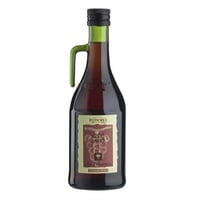
The ideal is a White Wine Vinegar, soft and not too aggressive, capable of respecting the vegetable component without making it too acidic.
If cucumbers, fennels, or celery are present in the salad, this type of vinegar maintains taste cleanliness and allows the natural sweetness of the vegetables to come forward.
👉 Useful insight: the section dedicated to Vinegars on Spaghetti & Mandolino offers various interpretations of wine vinegars and artisan specialties.
Here an important clarification is necessary: the caprese salad does not originate with balsamic. The strictest tradition only includes extra virgin oil, basil, and salt, but when one decides to use it, it’s essential to choose the right product.
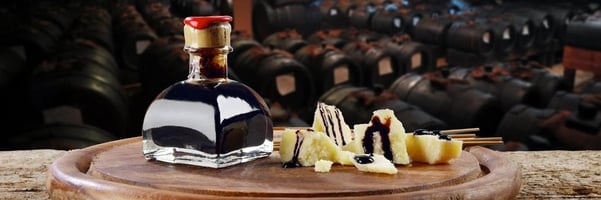
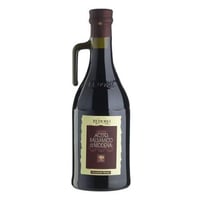
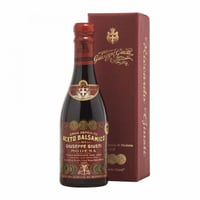
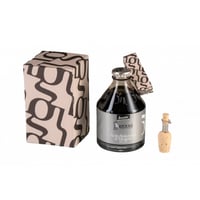
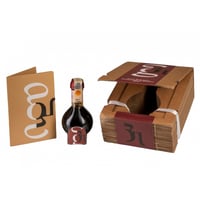
A true Traditional Balsamic Vinegar of Modena DOP or Reggio Emilia DOP, used in very few drops, is capable of amplifying the sweetness of ripe tomatoes and mozzarella without turning the dish into a dessert.
The discussion differs for very sweet industrial balsamic dressings: they often end up completely covering the taste of the ingredients.
The key word is balance.
👉 Also worth exploring is the section dedicated to Balsamic Vinegar.
In recent years, salads with peaches, figs, apples, pears, or berries have become the stars of the Italian summer.
Here, a traditional wine vinegar risks being too strong.
Apple cider vinegar, on the other hand, has a natural softness and a fruity aromatic component that perfectly complements these ingredients.
Think of: lamb's lettuce, green apple, walnuts, and fresh goat cheese, or little gem, peaches, prosciutto, and toasted almonds.
Apple cider vinegar ties all these flavors together without creating too strong contrasts.
Farro, barley, quinoa, chickpeas, lentils, and beans make for richer and heartier salads.
Here a simple wine vinegar risks disappearing.
Much better to use a Red Wine Vinegar or a vinegar made from particularly aromatic grape varieties.
The acidity helps lighten the starchy component of the cereals and makes each bite more dynamic.
With chickpeas, sundried tomatoes, olives, and red onion, for example, a well-made red wine vinegar returns depth without taking over.
Octopus, shrimp, squid, and cuttlefish have a very delicate natural sweetness, and the most common mistake is to cover them with too much vinegar; just a little is needed (it can also be avoided by using lemon as an "acidifier").
A young white wine vinegar or a few drops of a delicate vinegar can support the fish without changing its character.
Even more important is the extra virgin olive oil, which remains the true star of the dressing. The vinegar should almost work in the shadow.
Bitter vegetables represent one of the cases in which balsamic finds its best expression.
Late radicchio, Belgian endive, catalogna, and arugula have intense vegetal notes: the slight sweetness of balsamic can soften this component without eliminating it.
The pairing becomes even more interesting if the salad contains: Parmigiano Reggiano, walnuts, pears, speck, and figs; in these cases, balsamic builds a bridge between all ingredients.
More than choosing the wrong vinegar, often the way to use it is wrong.
The first mistake is to overdo the quantities. The vinegar should never become the dominant flavor.
The second consists of pouring it directly onto the leaves without emulsifying it with the oil. A simple emulsion makes the dressing more uniform and delicate.
Finally, be mindful of the temperature. An important balsamic vinegar should never be used on ice-cold ingredients just out of the fridge: the aromas close up, and the result loses elegance.
Vinegar was already precious in ancient Roman times
Legionnaires drank a mixture of water and vinegar called posca. It was considered refreshing, safer than stagnant water, and able to preserve the drink better during military campaigns.
Traditional Balsamic Vinegar was a gift for sovereigns
For centuries, barrels were kept in the attics of noble Modenese and Emilian families. The oldest vinegar was not sold but given on the occasion of weddings, distinguished visits, or particularly important events.
Every batch tells a family story
In the Emilian tradition, a batch of Traditional Balsamic Vinegar often accompanies the family for generations. The barrels are refilled every year following a ritual passed down over time, so much so that many vinegars on the market today are the result of processes that began decades ago. It is one of the few Italian foods that can truly hold the memory of a home.
If this topic fascinates you, you can continue your journey through summer flavors by also reading:
These are complementary contents that help understand how small details can completely change a dish.
 S&M
S&M



We recommend that you enjoy




✔ You have added the product to your cart!