By clicking on FOLLOW and confirming your registration, you will begin to receive updates via email and in your private area, when I insert a new product, inspiration or content regarding this manufacturer.
By clicking on FOLLOW and confirming your registration, you will begin to receive updates via email and in your private area, when I insert a new product, inspiration or content regarding this manufacturer.
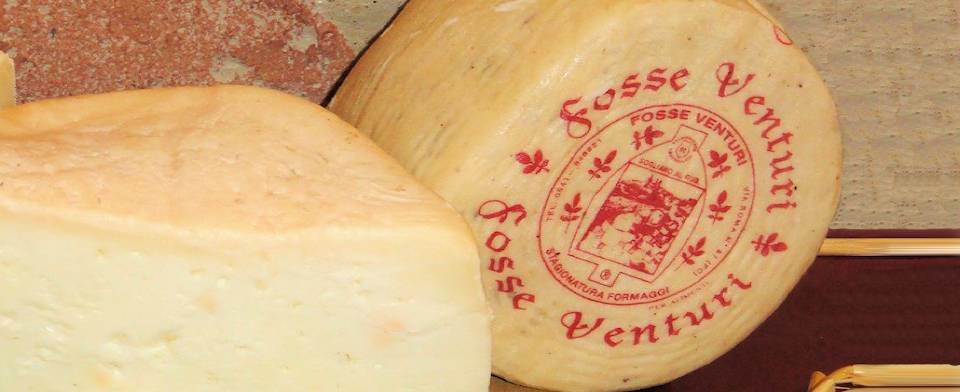
In Sogliano al Rubicone, in the province of Forlì, in Romagna, the practice of using pits is very ancient and is mentioned for the first time during the rule of the Malatesta (1255 - 1500). They were created even earlier, and their use is thought to have been intended for the storage of grain, hay, and even ice. Later on, there were reports of burials of cheeses in various shapes and sizes for more or less prolonged periods. This was done to hide food and prevent it from being taken by passing troops or night scavengers. A technique that highlighted how, after this passage in the pit, the cheese would take on particularly different tastes and aromas that enhanced the olfactory aromatic structure of the product.
Fosse Venturi between history and tradition
Since 1350, with the establishment of the Compagnia dell'Abbondanza, the burials of cheese wheels by families were regulated, and rules were established regarding the maturation periods in the pits. The wheels had to be placed in the pits towards the end of August and had to be opened on the feast day of St. Catherine, November 25. Even today, these dates are respected, and loyalty to the centuries-old tradition is maintained. The Venturi family has owned their conical pits excavated in tuff for many years, and they have now become a cornerstone of the quality of this type of cheese.
 /
Producers
/ Fosse Venturi
/
Producers
/ Fosse Venturi