 / Our magazine / Ode to Italian pasta: history and art, now I eat you!
/ Our magazine / Ode to Italian pasta: history and art, now I eat you!
/ Our magazine / Ode to Italian pasta: history and art, now I eat you!
A Gragnano, in the beautiful valley of the mills that runs through the Lattari Mountains, the water has been the magic of Spaghetti and Maccheroni for over 600 years. In Piazza San Leone, the monumental fountain built in 1604 collects the waters coming from the peaks and can be savored in all its purity and sweetness. The Italian pasta was born precisely among the narrow streets built to create an open-air dryer.
Pasta: a Neapolitan myth that has managed, with its various shapes, to conquer the world. There are many anecdotes and famous images linked to this simple product of nature and human labor. How can we forget the famous gag by Alberto Sordi, in the film An American in Rome, “Macaroni… you provoked me and I’ll destroy you! Macaroni, I’ll eat you!”? Who can forget Totò’s hands filling his pockets with spaghetti and sauce in the film Poverty and Nobility? Federico Fellini, narrating himself in front of Castel dell’Ovo in Naples, stated brilliantly, “life is a combination of pasta and magic.” A true Neapolitan like Sofia Loren never neglected her gastronomic origins and she often said, “everything you see, I owe to spaghetti!”
Those who love the history of Italian cuisine cannot forget the feud between Giacomo Leopardi and the Neapolitan singer Gennaro Quaranta. Leopardi in 1835, in a few lines of the composition I Credenti, expressed all his disdain for the Neapolitan people due to their love for pasta.
“...all at my expense
Naples competes to defend
its macaroni; that for macaroni
facing death is too painful.”
Gennaro Quaranta replied with all the mastery of neapolitan biting irony, which brings much laughter.
“O sublime Poet of Recanati,
who, blaspheming at Nature and Fate,
rummaged dentro di te with horror.
But had you loved Maccheroni
More than books, which give a black humor,
you wouldn’t have suffered harsh ailments...”
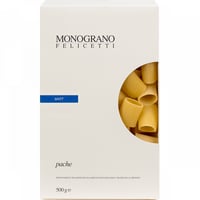
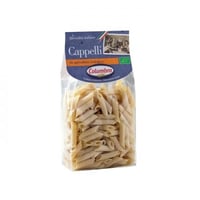
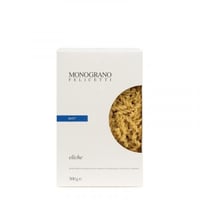
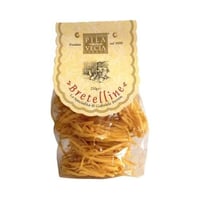
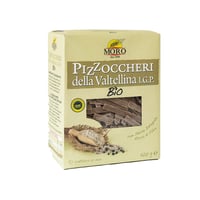
Spaghetti & Mandolino has endeavored since the beginning to offer its customers a wide selection of pasta, as it represents the cornerstone of typical Italian gastronomic culture. Finally, we can tell you the ancient history of genuine Italian pasta (do you know the story of Gragnano pasta?) with the historic Pastificio Mulino di Gragnano and the more modern evolution of pasta coming from the green valleys of the Dolomites of Fassa, with the Pastificio Felicetti (here we present a bit of history and formats of Felicetti). We have chosen noble pasta factories from Marche like that of the Columbro family and we are incorporating a new complete supply chain from Piedmont.
And finally, allow us a bit of popular Italianity, (nothing to do with Leopardi mentioned earlier) which I would represent taking inspiration from a beautiful quote by Catherine Deneuve: “Italians only have two things on their minds: the other is spaghetti.” Nothing to add.
 S&M
S&M


We recommend that you enjoy



✔ You have added the product to your cart!