 / Our magazine / Lactose-free cheeses: do you know what they are and their features?
/ Our magazine / Lactose-free cheeses: do you know what they are and their features?
/ Our magazine / Lactose-free cheeses: do you know what they are and their features?
In recent years, there has been an increasing discourse about lactose-free cheeses.
Many seek them out for dietary choices, others because they suffer from lactose intolerance, and still others simply want to understand better what they are putting on the table. But there is one aspect that surprises almost everyone: many of the great cheeses from Italian tradition are naturally free or almost free of lactose, without the need for modification.
This is not a recent trend. It is the result of ancient production processes, long maturation, and the natural action of lactic ferments, which transform lactose during maturation until it is practically absent.
Knowing these products means discovering another facet of Italian cheesemaking culture, which is built on time, patience, and extraordinary biodiversity.
The first misunderstanding to clarify concerns the term "lactose-free".
Not all lactose-free cheeses are produced by artificially removing lactose. Many become lactose-free naturally during maturation.
Lactose is the sugar naturally present in milk. During cheese production, lactic ferments use it as nourishment, progressively transforming it into lactic acid. The longer the maturation, the lower the presence of lactose is generally.
This is why many aged cheeses today carry the label "naturally lactose-free" or values below the limits set by regulations.
It is important to remember that those who suffer from intolerance should always check the indications provided by the producer and consult their doctor in case of specific needs.
The good news is that many symbols of Italian cheesemaking fall into this category.
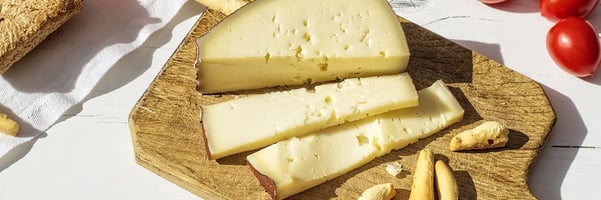
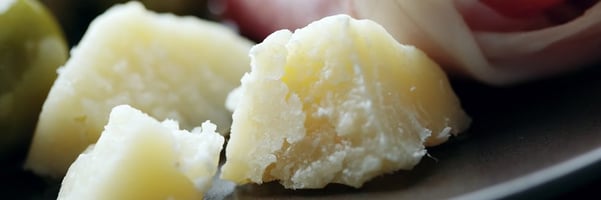
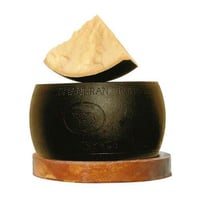
Among the most well-known is the Parmigiano Reggiano DOP, which after a long maturation period is naturally lactose-free. The same goes for many Grana Padano DOP, for many aged pecorinos, for various mountain cheeses, and for numerous artisan productions of cow, sheep, and goat cheeses that mature for a long time.
Some great Venetian, Lombard, and Piedmontese cheeses also naturally reach extremely low lactose levels due to the aging process.
Alongside these, there are specifically lactose-free products, obtained by adding the enzyme lactase during processing. They are a valid alternative for those who wish to enjoy fresh cheeses like mozzarella, crescenza, or robiola.
One of the most frequently asked questions pertains to taste.
The answer depends on the type of cheese.
When talking about naturally lactose-free cheeses, the flavor does not change at all: it is simply what nature and time have crafted during maturation.
Indeed, aging develops more complex aromas, notes of dried fruit, butter, herbs, hay, and spices that make these cheeses particularly interesting from a gastronomic point of view.
In contrast, some fresh lactose-free cheeses may present a slight perception of increased sweetness due to the transformation of lactose into simpler sugars. However, these differences are often very subtle.
Versatility is one of their major strengths.
Naturally lactose-free aged cheeses find ideal companions in honeys, mostardas, fig preserves, pears, quinces, and dried fruits.
With a Parmigiano Reggiano aged over 30 months, for example, just a few drops of Traditional Balsamic Vinegar can create one of the great classics of Italian cuisine.
Aged pecorinos pair magnificently with chestnut honey, onion preserves, or rustic bread.
The goat cheeses aged, on the other hand, find balance with mineral white wines, dry Rieslings, or fresh fruits like pears and grapes.
Even at the table, they can become stars of simple recipes: shavings on summer salads, cold pastas, vegetable carpaccios, risottos, or appetizer platters.
The advice is always the same: let the cheese tell its identity without overwhelming it with overly intrusive ingredients.
Thinking of lactose-free cheeses as a modern invention means forgetting the history of our cuisine.
For centuries, Italian cheesemakers have aged forms for months, sometimes years, without knowing anything about enzymes or laboratory analyses. They simply sought quality, shelf-life, and taste.
The fact that many of those products are now naturally compatible with some intolerant individuals is a consequence of tradition, not an initial goal.
It's one of the many examples of how Italian gastronomic culture has often anticipated science.
Many existed long before lactose intolerance was mentioned
The great aged Italian cheeses were naturally very low in lactose centuries before medicine identified intolerance. Their characteristic comes from the production method, not from modern processing.
Aging was also a method of preservation
In mountain communities and rural Italian areas, cheese was aged primarily to preserve it through winter. Naturally eliminating lactose was a consequence of time, not the goal of processing.
Every valley has developed its own way of aging
From natural caves to stone cellars, to high-altitude pastures, every Italian territory has built different maturation environments over the centuries. It is precisely this variety of microclimates that makes the Italian cheesemaking heritage one of the richest in the world, with flavors and aromas that vary from valley to valley, even starting from the same milk.
If the world of cheese fascinates you, you can continue reading with some related blog content.
5 Riesling and cheese pairings that will leave you speechless, dedicated to the encounters between great wines and different types of cheese.
Gorgonzola, lactose, calories, and cholesterol: what is true and what is not? An in-depth look at the king of blue cheeses or as they were once called - green cheeses.
Mostarda: what can you eat it with? Here are many good tips! where you will discover how mostarda can become an important dish on your table.
These articles allow for a deeper exploration of pairing and discovering new ways to enjoy Italian cheese excellence.
 S&M
S&M
We recommend that you enjoy



✔ You have added the product to your cart!