 / Typical products / Cured meats / Cured meats / Typical products / Cured meats / Cured meats
In Italy there are numerous types of cured meats linked to different cultures and traditions, created using very different cuts of meat and following ancient recipes that have existed for centuries.
There are cured meats that are stuffed and not, raw and cooked, smoked and unsmoked. Among such a variety of products, it is almost difficult to choose, given the enormous quantity of excellence of cured meats that our beautiful country is home to and produces.
Whatever product you choose, we are able to deliver it to your home, in Italy or abroad, with the possibility to choose from over 80 types of quality cured meats! For us, whether it's cotechino or salama da sugo, prosciutto di Parma DOP or San Daniele DOP, it makes no difference; we treat them all like "children," having them delivered vacuum-sealed and shipped in a special package that maintains controlled temperature.
 Show filters
The online sale of this product follows the philosophy of Spaghetti & Mandolino, which is to give the opportunity for lovers of Italian cuisine and excellent products to have products that are otherwise difficult to find conveniently at home. The shipping and packaging follow strict rules that allow the preservation of all the characteristics and organoleptic properties of the product.
To produce good salumi, it takes excellent producers. On our ongoing journey, we have selected several (and continue to do so) and have chosen for you more than 150 products of the highest quality: traditions and flavors from all the Italian regions. There are certainly more or less known salumi, but precisely for everything they represent, they are absolutely worth knowing and, above all, tasting. Our goal is to have you join us on this journey through all these excellences.
The word "salumen", a late Latin term, spread during the Middle Ages and was used to indicate any product preserved in salt. Over time, however, this term became increasingly associated with products made using pork due to its easy availability in nature. Since Prehistory, different stages of salumi production followed one another, gradually becoming what we know today. It is from here that the ancient history of salumi begins.
In Italy, the presence of ham and sausages can already be traced back to the Etruscan and Roman times, although such meat preservation practices date back to much more ancient times, even to the Paleolithic, around 2.7 to 2 million years ago. In short, we are talking about a very ancient practice that has been refined over time, creating the production of excellence made of traditions and flavors that we know today.
It seems that the first real sausages were prepared in Egypt and Ancient Greece more than 3,000 years ago; in Etruscan-Roman times, sausages were even mentioned by famous poets and orators such as Cato the Censor and Horace. During the Lombard dominion, however, a real turning point occurred with the introduction of innovative preservation techniques that allowed a transition from cooked to raw sausages, thanks to the development of innovative systems for preserving raw meat.
With the barbarian invasions starting in the 5th century AD, the pig became one of the most important resources, as it could be easily found in the wild, and its meat, when processed, allowed the accumulation and preservation of edible food supplies with high energy content for long periods.
However, it is only from the 13th and 14th centuries that the art of charcuterie began to develop, giving birth to many typical regional salumi that we still find on our tables today. During the Renaissance, the first Guilds were even established to regulate and protect the production of salumi. Only starting in the 19th century did the first real artisan salumi factories and industrial laboratories emerge and spread. With dedication, passion, and the continuous technological development that characterized those years, they were able to develop innovative systems to limit the alteration and spoilage of food, thus giving a strong impetus to the birth and development of a flourishing artisan production and trade of food products.
Currently, even though this policy has been in place for more than half a century, the commitment to protecting and enhancing all typical products, reducing additives and preservatives, digitizing data on traceability, and producing organic salumi is growing stronger, as we at Spaghetti & Mandolino are a clear example.
Salumi represent one of the many Italian food excellences and are often much more than just food that enriches the table for many Italians. In many respects, they are treasures where the traditions, history, and flavors of an entire country are jealously preserved, allowing us to maintain a direct connection with our origins, bringing to the table not only a high-quality product rich in flavors and aromas but also a symbol of Italian identity.
The Salumi you will find in this section are incredibly varied in shape, color, aroma, and flavor, but they all have one thing in common: the passion and dedication with which our skilled suppliers are able to create these extraordinary products. Only the best of Italian salumi production! But now let’s take a look at which salumi you can find in our e-commerce.
Bresaola is a raw, unsmoked cured meat originally from Valchiavenna, in the province of Sondrio, in Lombardy. In reality, Bresaola, although in different varieties, is produced in various areas of Northern Italy using primarily beef but also horse, venison, buffalo, or pork meat.
The most famous and excellent varieties of this salumi are, however, Bresaola della Valtellina IGP and Bresaola di Bufala, both loved for being particularly lean and for their distinctive aroma obtained during the processing stage where the piece of meat is left to rest in brine tanks with various herbs such as juniper berries, cloves, and wild bay leaves.
When sliced, Bresaola has an intense reddish color, darker or lighter depending on the meat used, compact, with few veins due to natural fat deposits and connective tissue. Bresaola is highly recommended in diets as it is practically fat-free. But its best feature is its high protein content.
Bresaola della Valtellina IGP is made using beef from European breeds, with the most used cut being the top round, although the bottom round and the eye of round are also commonly used. Bresaola di Bufala, on the other hand, is made from buffalo meat, known for its distinctive taste and tender, juicy texture. A product with ancient origins but perfect for a modern cuisine.
Coppa, also called capocollo in Campania, finocchiata in Siena, ossocollo in Veneto, lonza in Lazio, or lonzino in Marche and Abruzzo, is a salumi present in Italy with various interpretations and recipes. It is made from the upper portion of the pig's neck and a part of the shoulder. The selected meat is salted and massaged before being stuffed into a natural casing and left to cure. During the process, various spices and aromatic herbs are added, the variety depending on the region where the coppa is made.
There are different interpretations of Coppa throughout Italy, including refinement methods that are entirely unique; an example is the Venetian Coppa refined in Amarone della Valpolicella DOCG or the Pugliese Capocollo al Vincotto.
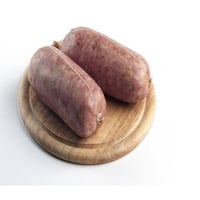
Cotechini and Zamponi are true symbols of the Christmas festivities, present on our tables for ages and are highly energetic foods, thanks to their high fat content, which are usually consumed during the cold winter. These two salumi have a minimal but crucial difference: the Zampone, as the name suggests, is stuffed into the pig’s leg, while the Cotechino is stuffed into a casing made from the pig’s stomach, bladder, or skin. Cotechini and Zamponi may look a bit rustic, but they hold a true surprise as they are capable of releasing a real explosion of flavor.
The history of the Zampone is also part of the history of Modena: its first appearance can be found in historical documents concerning the Siege of Mirandola, which took place between 1510 and 1511, under the will of Pope Julius II della Rovere. The locals, to hide the pigs from the invaders, butchered them and stuffed the minced meat into their legs. The particular shape of the Zampone and the softness guaranteed by this type of casing has remained unchanged to this day.
The Cotechino also seems to be a classic of Modenese tradition, but the debate about its origin has sparked a kind of dispute with the Friulians, who firmly claim its true parentage. The only certain fact is that the art of putting meat into a casing for optimal preservation is a very ancient practice, linked to the traditions of butchers and even to the Celts.
In Italy, Cotechini and Zamponi were considered for a long time as poor sausages, which were regularly eaten by the less wealthy classes, often accompanied by minestrone or legume soup.
Culatello is a typical product of Emilia Romagna. It is identified as a salumi stuffed in a natural casing, usually the bladder of the same pig, often referred to as the "King of salumi." The cut of Culatello, without a doubt one of the most prized Italian excellences internationally, is the most tender and precious part of the thigh of adult pigs raised in the wild.
The famous Culatello di Zibello DOP, for example, is a salumi product made from the anatomical part of the posterior and inner crural muscle bundle of the pig’s thigh, which, after being appropriately de-skinned, trimmed, and boned, is separated from the fiocchetto (another highly prized part used to produce another salumi, the Fiocco di Culatello) and manually trimmed to obtain the classic pear shape. By the way, do you know the difference between Fiocco and Culatello? Don’t worry, we explain it in our magazine.
Since 1996, in recognition of its prestige and centuries-old history, Culatello di Zibello has been awarded the DOP mark, guaranteeing and protecting its meticulous production process. Culatello di Zibello is also part of the Slow Food Presidia of Emilia Romagna, consisting of only four companies from the province of Parma.
There are also other salumi from the lower Parma area that may be confused with Culatello due to similar names, such as Culaccia, Culatta, or Granculattina. To avoid confusion, you can read this article from our magazine: Culatello, Culaccia, and Culatta: what’s the difference??
Lardo is a salumi made from pork, specifically from the subcutaneous fat of the neck, back, and sides of the animal, i.e., all those areas where the fat layer is present and quite thick. With many regional varieties, lardo stands out from other salumi for being extremely aromatic; every preparation involves the use of spices or herbs that enhance its flavor.
Despite being extremely rich in saturated fats, it remains one of the most well-known Italian salumi. Its quality mainly depends on the choice of raw materials, i.e., the pig’s fat and the herbs, and the skill of the master salumi maker in mastering the art of curing.
As mentioned earlier, there are many varieties of Lardo, but the two most famous ones are undoubtedly Lardo di Colonnata IGP and Lardo di Arnad DOP. Lardo di Colonnata IGP takes its name from the place where it is produced, Colonnata, a small village in the Apuan Alps, a hamlet of the town of Carrara, in Tuscany; this humble food has long been a fundamental part of the diet for those who did heavy labor, such as the marble quarry workers, who were very prevalent in the area where this salumi is produced.
It has a homogeneous and soft texture, is white in color, and has a fragrant aroma rich in spices that is immediately captivating. The taste, fresh and delicate, almost sweet, finely savory when it comes from the rear part, enriched by herbs and spices, allows for a truly unforgettable tasting experience.
Lardo d'Arnad DOP, from the town of the same name in the lower Aosta Valley, undergoes a different process than its "cousin" from Colonnata but is just as characteristic. It has a white color with possible light pink hues, and its taste, strongly aromatic, clearly reveals the herbs used in the curing process.
Mortadella from Bologna is a salumi made from pork using only select cuts of meat, finely ground, and lard, lightly flavored with various spices such as salt, cinnamon, cloves, nutmeg, musk, whole peppercorns, sugar, and Malvasia wine, which is then stuffed and finally cooked. It has a typical cylindrical or oval shape and is characterized by a light pink color with small round white portions, which represent the fat part of the salumi.
Mortadella has an intense aroma, truly delicious and strongly aromatic. Its taste is full but extremely delicate. Mortadella's origins probably date back to the 1st century AD, and it can be traced to an area between Emilia-Romagna and Lazio. For a long time, this salumi was completely forgotten, only to reappear, with great honor, in the late Middle Ages when production was concentrated exclusively in the city of Bologna. Mortadella is a key ingredient in many Bolognese traditional dishes, but it is also the favored ingredient in some of the most creative recipes today.
The most famous and renowned variety of this salumi is without a doubt Mortadella Bologna IGP, although there are also other varieties available that, while not carrying the IGP recognition, are still extraordinary in terms of quality and flavor. Traditional Mortadella contains pistachios, although recently, a pistachio-free version has also been introduced.
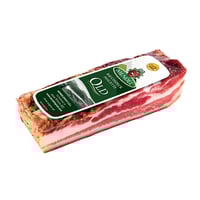
Pancetta is a salumi prepared with a very fatty cut of meat from the belly of the pig. The final appearance of pancetta is a layer of white fat with pink streaks representing the small portion of lean meat present in the cut used. It’s important to note that there are different types of Pancetta, which vary in shape, production method, and the cut of meat used. Pancetta can be smoked or not, rolled or flat, raw or cooked, salted or cured, and so on. These are just a few of the delicious varieties waiting to be discovered and savored.
Cooked Ham is a typical Italian salumi obtained by salting and cooking the pig's leg. The Ministry of Economic Development distinguishes cooked ham into three distinct categories based on the quality of the raw materials and therefore a price difference: high-quality cooked ham, selected cooked ham, and finally, cooked ham. Often considered, and unfairly so, an inferior quality salumi, Cooked Ham is a versatile and low-fat product, making it an optimal choice for various occasions.
Probably, along with raw ham, Cooked Ham is the most used salumi in the kitchen for creating delicious pasta dishes, tasty main courses, finger food, appetizers, side dishes, and especially as the main ingredient in sandwiches and toast. Cooked Ham is usually boned, salted, injected with brine or saltwater, massaged, and then steam-cooked, hence its name, in metal molds that give it its well-known shape, making it easy to slice.
Even though Cooked Ham has not received any particular protection marks, it has still been included by the Ministry of Agricultural, Food, and Forestry Policies in the list of PAT (Traditional Agri-Food Products).
Raw Ham is a typical Italian salumi obtained by dry-salting the pig’s leg. Perhaps one of the most famous Italian salumi worldwide, Raw Ham has been interpreted in many ways by various regional productions, but the two most famous and renowned variants are mainly Prosciutto San Daniele DOP and Prosciutto di Parma DOP.
Prosciutto San Daniele is produced exclusively in Friuli Venezia Giulia, specifically in the hilly area of the town of San Daniele in the province of Udine, and is easily recognizable by the presence of the pig's leg; it is a completely natural food, free from any additives or preservatives, and its aging lasts at least 13 months. The aroma is intense, and the taste is sweet and delicate, with a slightly more pronounced aftertaste.
Prosciutto di Parma is a globally famous excellence, probably the best-known Italian salumi. It is produced in the area including the territory of the province of Parma up to the south of the Emilia road, although most production is concentrated around the town of Langhirano. It is recognizable by the crown, the historic mark of original Prosciutto di Parma, and it is also a completely natural product, free of any additives or preservatives. Its flavor is sweet and refined, with a low-calorie content that does not compromise its intense and distinctive taste.
In short, we can absolutely say that Raw Ham, in all its variants, is truly a unique product worth tasting!
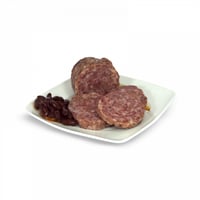
Salama da sugo IGP is a stuffed salumi typical of the province of Ferrara, excluding the municipalities of Goro, Codigoro, Lagosanto, and Comacchio. It appears as a round salumi, called “a melon,” with a dark brown color, tied with a string that divides it into six or eight slices. The aroma of Salama da sugo is particularly intense and aromatic, a completely characteristic scent that will instantly strike you.
Upon tasting, the salama is particularly soft and grainy, and its full flavor, which lingers due to the masterful use of herbs, is something totally unexpected and truly surprising. It is a high-calorie product, made by grinding various cuts of pork in precise percentages dictated by strict European regulations.
A peculiarity of the Salama da Sugo IGP is its texture: once cooked, it is freed from the string and cut at the top, creating an opening that allows you to scoop out the soft mixture inside with a spoon. Ideally, it should be served hot, perhaps accompanied by a side dish with a delicate flavor that contrasts with its intense taste. Special attention should be paid to its cooking method, and to learn more, just read here: How to cook the Ferrara Salama da Sugo.
From north to south, Salame is the quintessential cured meat, representing Italian salumi production. Salame is made from different types of meat, cuts, and spices that reflect the various interpretations given by different regions and local traditions. Salame is a cured meat obtained from a mixture of ground meat and fat, which can have different aging periods. The name of this salumi comes from the salting process that ensures its preservation.
The mixture of meat and fat is then mixed with salt and a variety of spices, depending on the region of production and, therefore, the local recipes, often centuries-old. The most commonly used meat is pork, pure or mixed, although some specific local salami are also made with goat, sheep, horse, donkey, goose, or game such as wild boar or deer.
Depending on the different local traditions, you can also find other ingredients such as turnips or the pig's own blood. The fat is always pork fat for organoleptic and preservation reasons. The varieties of Salame are numerous, from soppressa to finocchiona, from salame delle nebbie to schioppo.
Speck is a salumi typical of Trentino Alto Adige, more specifically of the South Tyrol, and its name comes from the Middle High German "spec" and the more modern German "spek," which literally means "thick, fatty". It is a piece of pork leg that is completely boned, lightly smoked, and then cured in the characteristic fresh mountain air typical of the region.
Depending on the type of cut used, Speck takes on slight flavor variations. Some prefer it sliced thin with a slicer to enhance its enveloping flavor, while others, following the traditional method, prefer it sliced by hand.
Speck was born by combining two different methods of meat preservation: curing, practiced in the Mediterranean area for millennia, and smoking, typical of Northern Europe. Initially, Speck was made by farming families, and only later did an artisan production develop. The most famous and renowned varieties of Speck are Speck dell'Alto Adige IGP and Speck di Sauris, produced in a small mountain village in the province of Udine.
However, there are many regional varieties, both cooked and raw, produced in other northern Italian regions that have masterfully interpreted this salumi, creating truly unique products. Even today, what makes speck special are the ancient recipes of ancestors, passed down for over 100 years among South Tyrolean families.
In short, an extraordinary world with a thousand and more flavors. What are you waiting for? Try them all!
✔ You have added the product to your cart!